


With the continuous development of aero-engine technology, the working temperature of turbine blades continues to increase, and the working environment becomes more complex and harsh. Only relying on superalloy substrate and blade cooling technology can no longer meet the needs of turbine blades working environment.
In the 1950s, the turbine blades were coated with aluminized coating, which can effectively improve the oxidation resistance and corrosion resistance of the blades.
In the 1970s, modified aluminide coatings and nickel-cobalt-chromium-aluminum yttrium coated coatings were developed, which further improved the oxidation resistance and corrosion resistance of turbine blades.
In the 1980s, thermal barrier coatings with thermal insulation and oxidation resistance were commonly deposited on the surface of turbine blades.
Since the 21st century, rare earth coatings for turbine blades resistant to higher temperatures have been one of the research directions in the field of aero-engine technology .


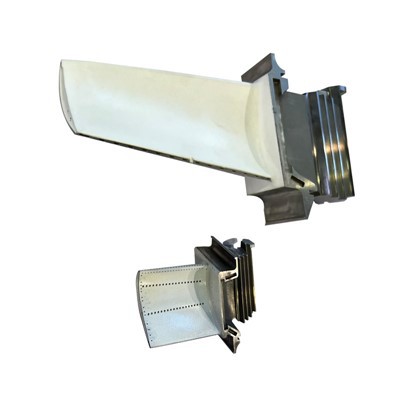
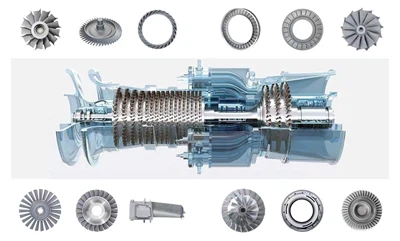
There are three main types of coatings for aeroengine turbine blades: single-layer aluminizing or modified aluminide coating, single-layer nickel-cobalt-chromium aluminum-yttrium coating and double-layer thermal barrier coating. ① Single-layer aluminizing or modified aluminide coating can be prepared by powder aluminizing, chemical vapor deposition and other processes. ② The monolayer Ni-cobalt-chromium-aluminum yttrium coating can be prepared by plasma spraying, physical vapor deposition and other processes. The aluminum element in the coating reacts with the oxygen in the external environment to form a continuous dense alumina layer on the surface of the coating, preventing the oxygen element from spreading to the interior of the coating and the matrix, thus playing the role of oxidation and corrosion resistance. ③ The bilayer structure thermal barrier coating is mainly composed of metal matrix, bonding layer, thermal growth oxide layer and ceramic layer, and its main structural composition is shown in Figure 2. The bonding layer can be prepared by plasma spraying, vacuum arc plating and other processes, and the thermal barrier coating can be prepared by plasma spraying, electronic physical vapor deposition and other processes. The adhesive layer has two functions: one is to improve the ability of oxidation and corrosion resistance; On the other hand, the thermal deformation stress between the ceramic layer and the superalloy matrix is coordinated. The ceramic layer has low thermal conductivity, which can prevent heat conduction from the high temperature gas to the metal matrix and reduce the surface temperature of the metal matrix. The double layer thermal barrier coating prepared by electron beam physical vapor deposition process has the advantages of high bonding strength and good surface finish, which is widely used in advanced aero-engine turbine blades.
The main technical indexes of aeroengine turbine blade coating include oxidation resistance, thermal conductivity and thermal shock resistance. The failure modes of coating mainly include wrinkling, cracking, skin lifting and shedding. The service life of the coating is generally less than the service life of the turbine blade. After the coating is used for a period of time, the coating can be repaired by removing and re-coating
Aero engine turbine blade coating technology has become one of the key technologies of advanced aero engine, and is developing towards the direction of longer service life, better thermal insulation performance, better oxidation and corrosion resistance, and higher reliability. New coatings such as rare earth zirconate or aluminate have higher temperature resistance, which is the focus of research in the field of turbine blade coating. Technical research such as coating composition design, multi-layer structure design and bonding layer design should be carried out to improve the temperature resistance of the coating. Research on coating preparation technology, such as the new preparation process of plasma - physical vapor deposition, or the combination of traditional process such as electronic physical vapor deposition + plasma spraying, is carried out to reduce the shielding effect of turbine blade coating and improve the life, thermal insulation performance and reliability of coating


