


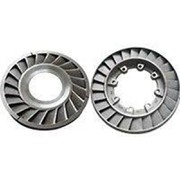
The main function of the turbocharger nozzle ring
Adjust airflow speed:
The airflow speed within the nozzle ring can be adjusted through its structure to meet different pressurization needs. Different nozzle ring structures will produce different airflow velocities, thereby improving boosting efficiency.


Reduce energy loss:
The nozzle ring pressurizes through the transformation of the geometric structure. Compared with other pressurization methods, it loses less energy and therefore has higher efficiency.
Offsetting inertia:
In high-speed airflow, due to the large inertia, it is difficult for objects to undergo large speed changes in a short period of time. The nozzle ring can adjust the direction of the airflow and suppress its inertia, thereby optimizing the acceleration effect.


Controlling exhaust gas flow:
The nozzle ring controls the amount of exhaust gas entering the turbine wheel, thereby controlling the speed of the turbocharger and optimizing engine performance.
Improved engine efficiency:
By increasing engine power output and reducing exhaust emissions, turbocharger nozzle rings help improve the engine's energy-saving and environmentally friendly performance.

Simplified system design:
The variable-section turbocharger uses sliding technology, which can realize exhaust gas recirculation within the full working range, simplify the diesel particulate filtration system, and reduce system weight and cost.


