


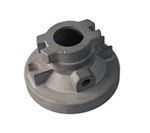


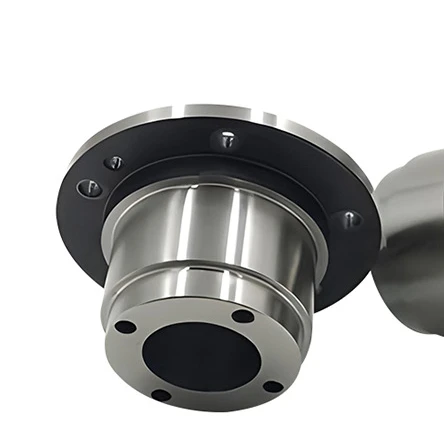
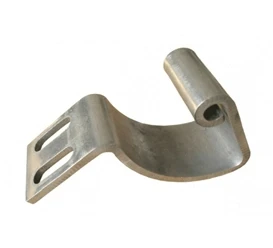


Titanium Alloy Automotive Parts

Material Introduction
The application scope of titanium alloys in the automotive industry covers multiple aspects such as engines, suspension systems, exhaust systems, chassis components, etc
1. Engine components:
- Turbine blades: Due to their excellent high-temperature strength and corrosion resistance, titanium alloy is commonly used in the manufacturing of turbine blades. These blades need to be able to withstand high temperature and high pressure environments, and provide reliable performance and long-term durability.
- Pistons: Titanium alloy pistons can reduce the weight of the engine, improve its wear resistance and high temperature resistance, thereby improving the combustion efficiency and power output of the engine.
2. Suspension system:
- Suspension spring: The high strength and lightweight characteristics of titanium alloy make it an ideal material for manufacturing high-performance suspension springs. The use of titanium alloy springs can reduce vehicle weight and improve the dynamic performance and stability of the suspension system.
- Shock absorbers: In some high-end cars, titanium alloy is also used to manufacture some internal components of shock absorbers to improve their wear resistance and corrosion resistance.
3.Exhaust system:
- Exhaust pipes: Titanium alloy is widely used in the manufacturing of exhaust pipes and exhaust manifolds due to its excellent high-temperature resistance and corrosion resistance. The use of titanium alloy materials can reduce the weight of the exhaust system and improve its performance and lifespan.
4. Chassis components:
- Brake system: In some high-performance cars, titanium alloy is used to manufacture brake discs to improve their wear resistance and high temperature resistance. This helps to improve the performance of the braking system and reduce wear and deformation of the brake discs.
- Wheels: Although relatively few, some high-end cars use titanium alloy to manufacture wheels to reduce the non suspension mass of the vehicle, improve the responsiveness and handling of the suspension system.
| Material number | Application |
| Ti-6Al-4V | One of the most common industrial titanium alloys, containing 6% aluminum and 4% vanadium. It has excellent strength, corrosion resistance, and weldability, and is commonly used in automotive engine components, suspension systems, exhaust systems, etc. |
| Ti-6Al-4V | Contains 3% aluminum and 2.5% vanadium. It has good weldability and machinability, and is commonly used in structural components in the aerospace and automotive fields. |
| Ti-6Al-2Sn-4Zr-2Mo | It has excellent fatigue resistance and corrosion resistance, suitable for high-strength requirements such as automotive engine components and chassis components. |
| Ti-6Al-7Nb | Medical grade titanium alloy with excellent biocompatibility and corrosion resistance, commonly used in the manufacturing of automotive medical devices and implants. |
| Ti-6Al-2Sn-4Zr-6Mo | It has high strength and heat resistance, and is commonly used in high-temperature components such as automotive engine components and turbine blades. |
| Ti-5553 | A new type of high-strength titanium alloy with excellent elastic modulus and corrosion resistance, suitable for automotive chassis components and suspension systems. |
Advantage
- The application of titanium alloys in the automotive industry is becoming increasingly widespread, mainly because they have the following advantages:
1.Lightweight and high-strength: Titanium alloys have lower density and excellent strength, are lighter than steel, and have similar strength to steel. This makes titanium alloy an ideal material in the field of automotive manufacturing, which can reduce vehicle weight, improve fuel efficiency and performance.
2.Corrosion resistance: Titanium alloy has excellent corrosion resistance and can be used for a long time in harsh environmental conditions without damage. This enables the use of titanium alloys in automotive manufacturing to extend the service life of components and reduce maintenance costs.
3.High temperature stability: Titanium alloy has good high temperature stability and can be used in high-temperature engine components, such as exhaust systems, turbine blades, etc., because it can withstand working environments under high temperature and pressure without failure.
4.Good formability: Although titanium alloys are difficult to process, they have good formability and can be used to manufacture various shaped components through forging, die-casting, injection molding, and other methods to meet the needs of automotive design.
- In the automotive industry, titanium alloys are mainly used in the following areas:
1.Exhaust system: Components such as exhaust pipes and manifolds have gradually replaced traditional stainless steel materials due to their high temperature and corrosion resistance.
2.Engine components: such as pistons, connecting rods, valves, and other high-temperature and high-pressure components, titanium alloy can provide lighter and more durable alternatives.
3.Chassis components, such as suspension systems, braking systems, etc., use titanium alloy materials to reduce vehicle weight, improve handling performance and fuel economy.
Overall, the application of titanium alloys in the automotive industry has broad prospects. With the advancement of material technology and the reduction of costs, it is expected that more automotive components will use titanium alloy materials to meet the needs of lightweight, high-performance, and environmental protection.
Comparison table of titanium material grades
| Chinese standards | American Standard | Russian standard | |
| TAD | Grade 1 | BT1-00 | |
| TA1 | Grade 2 | BT1-0 | |
| TA2 | Grade 3 | 0T4-0 Ti-0.8A1-0.7Sn | |
| TA3 | Grade 4 | 0T4-1 Ti-2Al-1.5Mn | |
| TA4 Ti-3AI | Grade 5 Ti-6A1-4V | OT4 Ti-3A1-1.5Mn | |
| TA5 Ti-4A1-0.005B | Grade 6 Ti-5A1-2.5V | BT5 Ti-5A1 | |
| TA6 Ti-5A1 | Grade 7 Ti-0.2Pd | BT5-1 Ti-5A1-2.5Sn | |
| TA7 Ti-5A1-2.5Sn | Grade 9 Ti-3A1-2.5V | BT6 Ti-6A1-4V | |
| TA8 Ti-5A1-2.5Sn-3Cu-1.5Zr | Grade 10 Ti-11.5Mo-4.5Sn-6Zr | BT6c Ti-6A1-4V | |
| TC1 Ti-2A1-1.5Mn | Gradel 11 Ti-0.2Pd | BT3-1 Ti-6A1-1.5Cr-2.5Mo-0.5Fe-0.3Si | |
| TC2 Ti-3A1-1.5Mn | Grade 12 Ti-0.3Mo-0.75Ni | BT9 Ti-6.5A1-3.5Mo-0.3Si | |
| TC3 Ti-4A1-4V | A-1 Ti-5A1-2.5Sn | BT/4 Ti-5A1-3Mo-1.5V | |
| TC4 Ti-6A1-4V | A-3 Ti-6A1-2Nb-1Ta | BT16 Ti-2.8A1-5Mo-5V | |
| TC6 Ti-6A1-1.5Cr-2.5Mo-0.5Fe-0.3Si | A-4 Ti-8A1-1Mo-1V | BT18 Ti-8A₁-0.6Mo-11Zr-1Nb | |
| TC7 Ti-6A1-0.6Cr-0.4Fe-0.4Si-0.01B | AB-1 Ti-6A1-4V | BT19 Ti-3A1-5.5Mo-3.5V-5.5Cr-1Zr | |
| TC9 Ti-6.5A1-3.5Mo-2.5Sn-0.3Si | AB-3 Ti-6A1-6V-2Sn | BT20 Ti-6A1-1.5Ma-1.5V | |
| TC10 Ti-6A1-6V-2Sn-0.5Cu-0.5Fe | AB-4 Ti-6A1-2Sn-4Zr-2Mo | BT22 Ti-5.5A1-5V-5Mo-1.5Cr-1.0Fe | |
Material characteristics
| Density: | The density of titanium is about 4.5 grams per cubic centimeter, making it one of the lightweight metal materials and of great significance for applications that require lightweight design. |
| Melting point: | The melting point of titanium is about 1668 degrees Celsius (3034 degrees Fahrenheit), which makes it stable in high-temperature environments and suitable for high-temperature processes and applications. |
| Conductivity: | The conductivity of titanium is about 3.0 × 10 ^ 6 Siemens/meter, which is equivalent to the conductivity of aluminum but slightly lower than that of copper. This enables titanium to be competent in applications that require conductivity, such as the casing and connectors of electronic devices. |
| Thermal conductivity: | Titanium has a thermal conductivity of approximately 21.9 watts per (meter Kelvin), which is not as good as copper and aluminum, but still has good thermal conductivity, making it suitable for high-temperature heat transfer and heat dissipation applications. |
| Hardness: | The hardness of titanium is usually between HB150 and HB300, which makes it relatively soft, but its hardness can be significantly improved through methods such as alloying and heat treatment to meet specific application requirements. |
| Tensile strength: | The common Ti-6Al-4V alloy has a tensile strength of over 1000 MPa, making titanium alloy one of the important structural materials in aerospace and other fields, capable of withstanding stress and loads under high strength requirements. |
| Corrosion resistance: | Titanium has high corrosion resistance to oxidizing media, seawater, acid and alkali, etc. Its corrosion resistance in marine engineering, chemical equipment and other fields is excellent, for example, its corrosion rate in 5% saline water is only 0.001 millimeters per year. |
Processing of titanium
The processing of titanium alloys in the automotive industry is relatively complex, mainly due to their high strength, low thermal conductivity, and high chemical inertness. The following are common processing methods for titanium alloys in the automotive industry:
1. Cutting processing: including turning, milling, drilling, etc., cutting is one of the most common titanium alloy processing methods. However, due to the high strength and low thermal conductivity of titanium alloys, it is necessary to use high hardness cutting tools and control the cutting speed, feed rate, and cutting depth to avoid overheating and tool wear.
2. Grinding processing: Titanium alloys usually require precision grinding to achieve higher surface and dimensional accuracy requirements. Grinding can use tools such as grinding wheels and grinding wheels, but it is important to avoid excessive grinding that can cause overheating and surface damage.
3. Electric discharge machining (EDM): For titanium alloy parts with complex shapes and high precision requirements, EDM is a commonly used method. High precision machining can be achieved by generating electric discharge on the surface of titanium alloy, but the speed is slow and the heat generated during the machining process needs to be controlled.
4. Laser cutting and laser welding: Laser processing technology can be used for cutting and welding titanium alloy parts. Laser cutting can achieve high-speed and high-precision cutting, while laser welding can achieve non-contact and high-quality welding.
5. Injection molding: For some small and complex shaped titanium alloy parts, injection molding technology can be used. This method is suitable for producing high-precision titanium alloy parts and can achieve mass production.
6. Precision forging: For some large and high-strength titanium alloy parts, precision forging technology can be used. This method can achieve high-strength and high-precision parts, and can reduce subsequent processing steps.
As one of the top ten titanium suppliers in China with over 20 years manufacturing experience. We are mainly engaged in titanium raw materials, such as titanium rods, titanium plates, titanium wires and so on.
There are some advantages about our company as follows:
- Our tolerance can reach 0.004mm
- Support OEM customization service.
- Alibaba credit guarantee: $530,000.00 Authorized by Alibaba to guarantee your money and business safe.
- Certificate: ISO9001, ISO14001, CE, EAC, TUV, SGS, SABER, TS16949.
- More than 40+ exporting countries and More than 300+ abroad customers.
Packaging and delivery
|
Packaging Details |
Foam+Plywooden case+Filler |
|
Selling Units: |
Single item |
|
Single package size: |
Customized |
Lead time
| Quantity (pieces) | 1-3 | > 3 |
| Lead time (days) | 30 | To be negotiate |
Samples
Maximum order quantity: 1 piece
Sample price:Negotiation
Customization
- Customized logo
- Customized packaging
- Graphic customization
For more customization details, message supplier
| Tolerance | CNC Machining ±0.004mm/Casting ±0.1mm |
| Processing Craft | Sand Casting/Lost Wax Casting/Investment Casting/Vacuum Casting/Forging/CNC Machining/etc |
| Surface Treatment | A variety of surface treatments and coatings can be produced and customized according to your requirements. |
| Type | OEM; Customized |
| Certification | ISO9001:2015 Certified, UL Certification,GE,SGS,TUV,etc |
| Inspection | 1.Foundry in-house: 100% inspection on critical dimension; 100% on appea rance. |
| 2.Third Party inspection available upon requirement. | |
| 3.Optional X-ray detection | |
| 4.Fluorescence detection | |
| Service | Drawing Custom |
| Mainly Testing Facility | Spectrometer,CMM, Tensile testing machine, Impact tester,Hardness tester,X-Ray,Salt spray test box, Pneumatic detection,UV accelerated weathering tester,dynamic balancing, high-temperature tensile testing,fluorescence test,room temperature mechanical property testing and other testing. |
| Quality Guarantee | 2 Years |
| Features & Advantage |
1.High machining accuracy, the flatness within 0.001mm |
| 2.High finish appearance, smooth surface roughness is Ra0.6 after machining. | |
| 3.The machining precision is high and the assembly structure is seamless. | |
| 4.Smooth appearance, corrosion resistance. | |
| 5.Pass Salt Spray Test with 144 Hours. | |
| Standard | ISO , DIN, AISI, ASTM, BS, JIS, etc. |
| ISO , DIN, AISI, ASTM, BS, JIS, etc. | |
| Payment | L/C,D/A,D/P,T/T,Western Union,Money Gram |
Why Choose us
As one of the largest casting factories in China, we have 20 + years of experience. I'd like to introduce our factory in detail for you:
- Adopt technology: lost wax investment casting, sand casting, shell mold casting, lost foam casting, vacuum casting and CNC machining, etc.
- Credit insurance: USD 1,110,000.00. Authorized by Alibaba to guarantee your money and business safe.
- Certificate: ISO9001, ISO14001, CE, EAC, TUV, SGS, SABER, TS16949, CE, EAC, SGS
- More than 40 + exporting countries and More than 300 + abroad customers.
FAQ
Q1.Are you trading company or manufacturer?
A:OBT was established In 2003,speclallzing in the production of casting, CNC machining, forged titanlum alloys, high temperature alloys, brass products and one-stop technical solutions for more than 20 years.
Q2. Do you customize products according to our design drawings ?
A:Yes, we are a professional metal manufacturing factory with an experlenced engineering team that can make customized products according to customer drawings. We can also reverse-engineer drawings based on samples to produce large quantitles of goods.
Q3. WIll my design drawings be safe when you get It?
A:Yes, we will not publish your design to a third party unless your permission Is obtalned. We can sign NDA before you send the drawings.
Q4:How to avold mass order quality problems?
A:Strengthen prior prevention and Inspection of the production and processing process, regard Important processes as the focus of quallty control, and track Inspection and defense throughout the process. It can provide Spectrometer,MM, Tensile testing machine, Impact tester, Hardness tester, X-Ray,Salt spray test box, Pneumatic detection, UV accelerated weathering tester,dynamic balancing, high-temperature tensile testing, fluorescence test,room temperature mechanical property testing and other testing.
Q5.What's your dellvery time?
A:In general, the dellvery time Is within 15-90 days after payment. Q6.What Is the speed of the Impeller? What's the highest temperature It can withstand? A:The Impeller speed can reach 12,000 pm, and the high temperature resistance can reach 1,200 degrees Celslus. Depending on the material, the high temperature resistance of the product Is different.

Hot Tags: titanium alloy automotive parts, China titanium alloy automotive parts manufacturers, suppliers, factory, Titanium Alloys Automotive Mufflers, Titanium Alloy Automobile Springs, Titanium Alloy Automotive Fasteners, Titanium Alloy Automotive
Previous
No InformationYou Might Also Like


Send Inquiry