


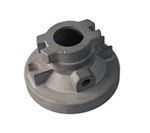


Single Crystal Casting Rotating Turbine Blade
OEM & ODM Services: Available
Weight: Custom
product key technologies

Single grain structure
The grain directions of turbine single crystal blades are consistent and there are no grain boundaries. Therefore, they have excellent high-temperature mechanical properties and thermal stability and can withstand extreme high-temperature and high-pressure working environments
High temperature resistance
The single-crystal blades are made of high-temperature alloy materials and have excellent high-temperature resistance. They can operate stably for a long time in high-temperature airflow and are not prone to deformation, ablation and fatigue damage.


Corrosion resistance
High-temperature alloy materials have good corrosion resistance and can resist erosion by high-temperature gases and chemical substances, extending the service life of the blades.
Long fatigue life:
Single crystal blades have excellent fatigue life and tensile resistance and can withstand high-frequency and high-amplitude loads, reducing the risk of blade failure due to fatigue damage.

Compared with traditional polycrystalline blades, turbine single-crystal blades have several significant advantages:
High-temperature performance: Monocrystal blades are composed of a single grain with fewer grain boundaries, allowing them to withstand higher temperatures and pressures. In contrast, the grain boundaries of polycrystalline blades are prone to stress concentration points, making them less heat-resistant in high-temperature environments.
Anti-fatigue performance: The single grain structure of single crystal blades is conducive to stress distribution and reduces stress concentration at grain boundaries and between grains, thereby improving the fatigue resistance of the blades and extending their service life.
Creep resistance: Due to the continuity of the grains, single-crystal blades have a longer creep diffusion path, making them better in high-temperature creep resistance. In contrast, polycrystalline blades are prone to creep.
Reduce oxidation and ablation: The uniform structure of the single-crystal blade reduces the occurrence of oxidation and ablation, improves the blade's resistance to high-temperature oxidation and ablation, and extends its service life.
Precision manufacturing: Manufacturing single crystal blades requires the use of highly precise directional solidification technology, which can achieve more precise blade geometry and size control, improving product quality and stability.
Improved efficiency: Since single-crystal blades have better high-temperature performance and mechanical properties, they can reduce the cooling requirements on the blade surface, reduce energy loss, and improve the thermal efficiency and power output of the turbine.
General manufacturing process of single crystal blades:
Material selection: Single crystal blades usually use single crystal high-temperature alloy materials, such as nickel-based alloys. These materials have high strength, high temperature oxidation resistance and good corrosion resistance, and are suitable for high temperature and high pressure working environments.
Single crystal preparation: The manufacturing process of single crystal blades usually uses directional solidification technology. In this process, through precise temperature control and crystallization direction control, the liquid metal is directionally solidified in the mold to form a single crystal blade with a single grain structure.
Mold manufacturing: The manufacture of single crystal blades requires the use of special molds to ensure that the liquid metal maintains the single crystal structure during the solidification process. These molds are usually made of high-temperature alloy materials or ceramic materials with excellent heat resistance and precision.
Precision machining: The manufactured single crystal blades require precision machining to ensure their dimensional accuracy and surface quality. This includes CNC machining, grinding, polishing and other processes to meet design requirements.
Heat treatment: After precision processing, single crystal blades need to be heat treated to adjust their structure and performance. Common heat treatment processes include solution treatment, aging treatment, etc. to enhance the hardness, strength and heat resistance of the blades.
Surface coating: In order to improve the corrosion resistance of single crystal blades and reduce surface friction, they are usually surface coated. Common coatings include ceramic coatings, thermal spray coatings, etc.
Quality control: During the manufacturing process, single crystal blades are subject to strict quality control and testing, including dimensional inspection, material composition analysis, metallographic structure analysis, non-destructive testing, etc., to ensure that the product meets design requirements and standards.
Hot Tags: single crystal casting rotating turbine blade, China single crystal casting rotating turbine blade manufacturers, suppliers, factory
You Might Also Like


Send Inquiry