


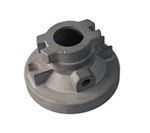


Turbine Engine Blade
OEM & ODM Services: Available
Weight: Custom
Tolerance:0.004mm
Smooth surface roughness:Ra0.6-3.2
A turbine engine blade is a critical component found in turbine engines, such as those used in aircraft propulsion, power generation, and industrial applications. These blades are designed to efficiently convert the kinetic energy of a fluid (usually air or combustion gases) into rotational energy, which is then used to drive various machinery. Here's an overview of turbine engine blades and their function:
Function of Turbine Engine Blades:

Energy Conversion:
Turbine engine blades are designed to extract energy from a flowing fluid, typically high-speed gases produced by combustion. As the gases flow over the blades, their kinetic energy is transferred to the blades, causing them to rotate.

Rotational Motion:
The rotational motion of the blades is connected to a central shaft, which drives various components of the turbine engine, such as compressors, generators, or fans.

Temperature Resistance:
Turbine engine blades are exposed to high temperatures due to the combustion process. They are made from materials that can withstand extreme heat and mechanical stresses without deforming or failing.

Aerodynamic Design:
The shape and profile of turbine blades are carefully designed to ensure efficient fluid flow and energy transfer. The blades need to operate within a specific range of speeds and pressures to maintain optimal performance.

Material Selection:
Turbine engine blades are often made from advanced materials like superalloys (e.g., Inconel) or ceramic matrix composites that offer excellent temperature resistance and mechanical strength.

Cooling Techniques:
To manage the high temperatures, turbine blades may incorporate internal cooling passages or external coatings that help dissipate heat.

Precision Manufacturing:
Turbine blades are manufactured with high precision to ensure their aerodynamic efficiency. Techniques like investment casting, additive manufacturing, and advanced machining are commonly used.

Balancing:
Just like any rotating component, turbine blades need to be balanced to prevent vibrations and ensure smooth operation.
Types of Turbine Engine Blades:
Compressor Blades: These are the first set of blades in the engine and are responsible for compressing the incoming air before it enters the combustion chamber. Compressor blades need to efficiently increase the air pressure while maintaining a smooth flow.
Combustor Blades: In some turbine engines, there are blades within the combustion chamber that help mix fuel with air and ignite the mixture. These blades are exposed to high temperatures and require thermal resistance.
Turbine Blades: These are the blades located in the turbine section of the engine. They are responsible for extracting energy from the combustion gases and converting it into rotational motion. Turbine blades are subject to extreme temperatures and mechanical stresses.
Turbine engine blades are essential for the operation of various industries that rely on efficient energy conversion, including aviation, power generation, and more. Their design, materials, and manufacturing processes are critical for ensuring both performance and safety in these applications.
Turbine blades are indispensable and key components in turbomachinery. Their design and manufacturing quality directly affect the performance, efficiency and reliability of the turbine. Therefore, various factors need to be taken into consideration when designing and manufacturing turbine blades, and relevant engineering standards and requirements must be strictly followed.
Hot Tags: turbine engine blade, China turbine engine blade manufacturers, suppliers, factory, Aircraft Turbine Blades, Turbine Stator Blades, Jet Engine Turbine Blades, Jet Turbine Blades, Jet Engine Compressor Blades, Titanium Turbine Blades
Previous
Impeller Turbine BladeYou Might Also Like



Send Inquiry