


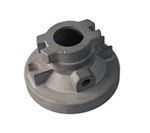


ALloy High Temperature Resistance Bolts And Nuts

High temperature resistant bolts have important advantages and a wide range of uses in engineering applications, mainly reflected in the following aspects:
High temperature resistance: High temperature resistant bolts can maintain their structural strength and functional stability at extremely high temperatures (usually over 500°C and beyond), and are not easy to soften or fail. This makes them reliable for long-term use in high-temperature equipment and processes.
Corrosion resistance: many high temperature resistant bolts are made of high temperature alloy or special stainless steel, with excellent corrosion resistance, can resist oxidation, vulcanization and other corrosion under high temperature environment, to ensure the long-term service life of equipment and structure.
Stable mechanical properties: High-temperature resistant bolts are specially designed and treated to maintain good mechanical properties in high-temperature environments, such as sufficient tensile strength, fatigue resistance and heat resistance, to ensure the safety and stability of the equipment during operation.
Wide application: High temperature resistant bolts are widely used in high temperature equipment and processes in petrochemical, electric power, aerospace, automotive and other fields, such as furnaces, boilers, gas turbines, heat treatment equipment, high temperature reactors, etc. They play a key connecting and supporting role in these areas.
In general, the advantage of high temperature resistant bolts is their ability to maintain stability and reliability in extreme high temperature and corrosive environments, and they are indispensable key components in many high performance engineering and manufacturing fields.


Material selection:
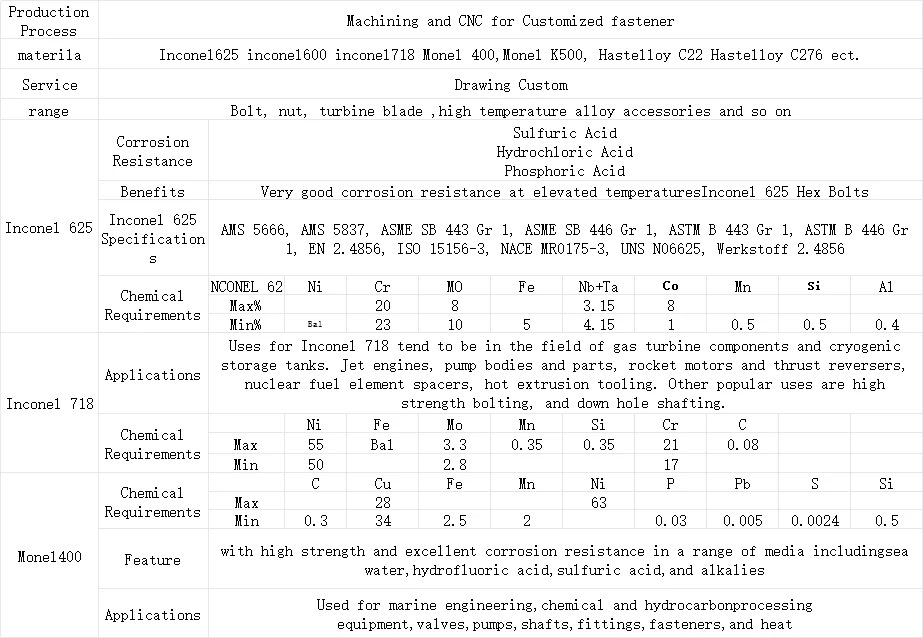
High temperature resistant bolts are usually made of high temperature alloys or special stainless steel materials, such as chromium molybdenum alloy steel (such as A-286), chromium nickel cobalt alloy (such as Inconel), chromium molybdenum molybdenum alloy (such as Hastelloy), etc. These materials have good high temperature strength and corrosion resistance, making them suitable for use in extreme conditions.
Cutting and processing:
The initial material is cut according to the design requirements to produce the original shape and size of the bolt. This may involve turning, milling, drilling and other processing processes to ensure that the bolt geometry and surface quality meet the standard requirements.
Heat treatment:
The key parts of high temperature resistant bolts need to undergo heat treatment process to improve their strength and high temperature resistance. Common heat treatment methods include solution treatment and aging treatment. Solution treatment is usually to heat the material to its solution temperature, so that the alloying elements are fully dissolved, and then quickly cooled to improve the plasticity and toughness of the material; The aging treatment is to further adjust the alloy structure and improve the strength and stability of the material after a certain period of low temperature aging after solid solution.
Surface treatment:
The surface of the bolts is usually treated with corrosion protection, such as galvanizing, spraying anticorrosive coatings, or special surface treatment processes to improve their corrosion resistance and life.
Quality Control:
Quality control is very important in the whole manufacturing process. Every key step of the bolt needs to be strictly inspected and tested to ensure that its size is accurate, its mechanical properties are stable, and its high temperature resistance meets the design requirements and standards.
Through the above manufacturing process, high temperature resistant bolts can meet the requirements of high temperature, high pressure and corrosive environment, and ensure the safety and reliability of equipment and structure.


|
Nominal |
d |
S |
k |
||||||
|
Major Diameter |
Width Across Flats |
Head Height |
|||||||
|
Min. |
Max |
Max. |
Min |
Grade A |
Grade B |
||||
|
Grade A |
Grade B |
Min |
Max. |
Min. |
Max |
||||
|
M3 |
2.874 |
2.980 |
5.5 |
5.32 |
- |
1.88 |
2.12 |
- |
- |
|
M4 |
3.838 |
3.978 |
7 |
6.78 |
- |
2.68 |
2.92 |
- |
- |
|
M5 |
4.826 |
4.976 |
8 |
7.78 |
- |
3.35 |
3.65 |
- |
- |
|
M6 |
5.794 |
5.974 |
10 |
9.78 |
- |
3.85 |
4.15 |
- |
- |
|
M7 |
6.794 |
6.974 |
11 |
10.73 |
- |
4.65 |
4.95 |
- |
- |
|
M8 |
7.760 |
7.972 |
13 |
12.73 |
- |
5.15 |
5.45 |
- |
- |
|
M10 |
9.732 |
9.968 |
17 |
16.73 |
- |
6.22 |
6.58 |
- |
- |
|
M12 |
11.701 |
11.966 |
19 |
18.67 |
- |
7.32 |
7.68 |
- |
- |
|
M14 |
13.682 |
13.962 |
22 |
21.67 |
- |
8.62 |
8.98 |
- |
- |
|
M16 |
15.682 |
15.962 |
24 |
23.67 |
23.16 |
9.82 |
10.18 |
9.71 |
10.29 |
|
M18 |
17.623 |
17.958 |
27 |
26.67 |
26.16 |
11.28 |
11.72 |
11.15 |
11.85 |
|
M20 |
19.623 |
19.958 |
30 |
29.67 |
29.16 |
12.28 |
12.72 |
12.15 |
12.85 |
|
M22 |
21.623 |
21.958 |
32 |
31.61 |
31 |
13.78 |
14.22 |
13.65 |
14.35 |
|
M24 |
23.577 |
23.952 |
36 |
35.38 |
35 |
14.78 |
15.22 |
14.65 |
15.35 |
|
M27 |
26.577 |
26.952 |
41 |
- |
40 |
- |
- |
16.65 |
17.35 |
|
M30 |
29.522 |
29.947 |
46 |
- |
45 |
- |
- |
18.28 |
19.12 |
|
M33 |
32.522 |
32.947 |
50 |
- |
49 |
- |
- |
20.58 |
21.42 |
|
M36 |
35.465 |
35.940 |
55 |
- |
53.8 |
- |
- |
22.08 |
22.92 |
|
M39 |
38.465 |
38.940 |
60 |
- |
58.8 |
- |
- |
24.58 |
25.42 |

Company Profile
Hot Tags: alloy high temperature resistance bolts and nuts, China alloy high temperature resistance bolts and nuts manufacturers, suppliers, factory
You Might Also Like



Send Inquiry