




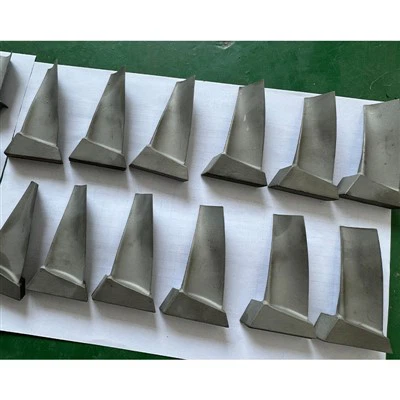
Vacuum Casting Turbine Blade For Jet Engine
OEM & ODM Services: Available
Weight: Custom
Tolerance:0.004mm
Smooth surface roughness :Ra0.6-3.2
Vacuum Casting Turbine Blade for Jet Engine:
Function: A vacuum-cast turbine blade for jet engines is a critical component designed to extract energy from high-velocity exhaust gases produced during combustion. In the context of a jet engine, these blades play a pivotal role in powering the turbine, which drives the compressor and, subsequently, facilitates the overall propulsion system.
Design and Materials:
Aerodynamic Design: Similar to other turbine blades, those produced through vacuum casting undergo meticulous aerodynamic design. The shape is optimized to efficiently capture energy from the fast-moving exhaust gases.
Materials: The materials used in vacuum casting for turbine blades are often advanced alloys such as nickel-based superalloys. These materials offer exceptional strength, heat resistance, and corrosion resistance, ensuring the blades can withstand the harsh operating conditions of a jet engine.
Precision Casting: Vacuum casting is a precision casting method employed for turbine blades. This technique allows for the creation of complex and intricate blade shapes with a high degree of accuracy.
Manufacturing Process:
Wax Model Creation: The process typically begins with the creation of a wax model of the turbine blade. This model is an exact replica of the final product.
Investment Casting: The wax model is then coated with a ceramic shell, creating an investment mold. The wax is melted out, leaving a cavity in the shape of the blade.
Vacuum Casting: The superalloy is melted and poured into the investment mold under a vacuum. This vacuum ensures that the molten metal fills the mold completely, capturing all the details of the intricate blade design.
Cooling and Finishing: Once the metal has solidified, the casting is cooled, and the ceramic shell is removed. The turbine blade is then finished, including any necessary machining and surface treatments.
Challenges:
Complex Geometry: The intricate shapes and internal cooling passages present challenges in ensuring that the vacuum-casting process captures all the details accurately.
Material Properties: The choice of superalloy must balance strength, heat resistance, and other material properties to withstand the extreme conditions in a jet engine.
Advantages:
Precision: Vacuum casting allows for the production of highly detailed and precisely shaped turbine blades.
Single-Piece Construction: The vacuum-casting process often results in a single-piece blade, reducing the need for additional assembly.
Conclusion: Vacuum casting for turbine blades in jet engines represents a sophisticated manufacturing technique that combines precision casting with advanced materials. These blades are integral to the efficiency and performance of jet propulsion systems, showcasing the continual advancements in aerospace engineering.
Hot Tags: vacuum casting turbine blade for jet engine, China vacuum casting turbine blade for jet engine manufacturers, suppliers, factory, Inconel 738 Lc Turbine Blade, Nickel Alloy Turbine Blade, Gas Turbine Blade, Lost Wax Investment Casting Turbine Blade, 5 Axis Turbine Blade, Superalloy Nickel Turbine Blade
You Might Also Like



Send Inquiry