


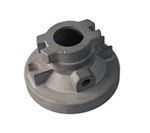


Inconel Gas Turbine Blade
Monocrystalline blades are usually used as one of the key components of turbomachinery, such as aero-engines or industrial gas turbines, in a way that involves installation, cooling and maintenance.
Turbine engine blades generally bear large working stress and high working temperature, and the changes in stress and temperature are also frequent and severe. In addition, there are corrosion and wear problems. The requirements for the working conditions are very demanding, so the blades are required to The processing accuracy is very high. At the same time, in order to improve turbine efficiency, the surface shape of turbine blades is usually designed as a twisted variable-section curved surface with a complex shape. Therefore, the precise geometric shape of turbine blades has become a necessary prerequisite for turbine machining. The essence of turbine blade geometric modeling is to find a mathematical method to describe the turbine blade surface that can not only effectively meet the requirements of shape representation and geometric design, but also facilitate the exchange of shape information and product data.
Installation location
Monocrystalline blades are usually mounted on the rotor of an engine or gas turbine and are used to convert high-temperature and high-pressure gas energy into mechanical energy. They are mounted in the rotor's blade groove and are bolted or otherwise secured in place.

Cooling Design
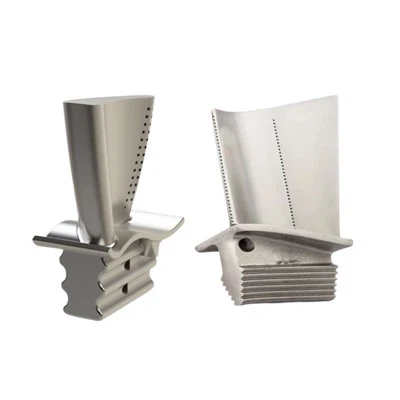
Since single crystal blades are subjected to extremely high temperatures and pressures during operation, a suitable cooling system needs to be designed to ensure that they are not damaged by heat. Cooling air enters through internal passages in the blades or through cooling holes in the surface of the turbine blades to reduce the temperature of the blade surface and remove heat.

Thermal Protective Coatings
Monocrystalline blades are often coated with thermal protective coatings to enhance their resistance to high temperatures. These coatings reduce heat transfer and absorption and protect the blade surface from hot gases.

Regular Maintenance
As one of the key components of an engine or gas turbine, monocrystalline blades require regular inspection and maintenance to ensure their performance and longevity. This may involve surface inspections, thermal temperature measurements, cleaning, and replacement when necessary.

Performance Monitoring
During operation, engineers monitor the performance of single crystal blades to ensure that they function properly under high temperature and high pressure operating conditions. This may include monitoring parameters such as vibration, temperature and pressure, and taking the necessary action in time to prevent failure.

Working principle of turbine blades
As the fluid passes through the turbine blades, its kinetic energy causes the turbine blades to rotate. Because the turbine blades have different shapes and directions, they experience different fluid forces, which causes the turbine blades to generate a torque. This torque is transmitted to the mechanical device through the shaft to achieve power output.
Structure of turbine blades
Turbine blades usually consist of three main parts: the inlet section, the intermediate section and the outlet section. The inlet section blades are usually wider and are used to guide the fluid to the center of the turbine. The middle section blades are usually thinner and are used to improve the efficiency of the turbine. The outlet section blades are used to push the remaining fluid out of the turbine.
Application of turbine blades
Turbine blades are widely used in aviation, automobiles, shipbuilding, engineering machinery and other major fields, and are an indispensable part of these industries. For example, in the aviation field, turbine blades are often used in propellers in jet engines; in the automotive field, turbine blades are often used in superchargers.
The difference between turbine blades and impeller blades
1. Different operation methods
Turbine blades are usually designed to rotate and directly output power. The impeller blades are usually designed to be stationary and used to expand or decelerate the fluid. For example, in a water pump, the turbine blades are often called propeller blades, and the impeller blades are called skip blades.
2. Different blade thicknesses
Turbine blades, which are power output components, are usually thinner because thinner blades provide a larger blade area, resulting in stronger power output. Impeller blades are usually thicker because thicker blades provide better resistance and expansion.
Hot Tags: inconel gas turbine blade, China inconel gas turbine blade manufacturers, suppliers, factory, Nickel Alloy Gas Turbine, Nickel Based Alloy Turbine, Inconel 718 Turbine, Nickel Alloy Gas Impeller, Inconel 738 LC Gas Turbine, 5 Axis Turbine Wheel
Previous
Turbine Blade ImpellerYou Might Also Like


Send Inquiry